

The era of using paper bid sheets for silent auctions is over. Besides limiting guests’ ability to bid, they’re a major administrative burden for your team: you have to print, distribute, monitor, decipher, and then collect all the papers at the end of the night to tabulate results. It’s a hassle and a risk (because yes—people do use them to cheat).
Fortunately, there are several types of silent auction technology you can use to replace bid sheets, with mobile bidding being the most common (and popular) method today. In this guide, we’ll explore the top options to help your organization host more engaging, successful auctions.

The History of Silent Auction Planning Tools
Auction planning tools have always had a range of capabilities that allow event planners to collect donations, organize them, and send donation receipts to item donors. In the past, basic auction technology would also:
- Generate paper bid sheets for you to place at each item display. To help bidders understand the item details, planning tools often allowed managers to print pre-formatted display sheets or auction item catalogs.
- Automate bidding with rented devices. Before smartphone adoption was widespread, the most prominent auction bidding tools were devices that a charity would rent from bidding companies. Bidders would either be handed a personal device or a card (like a hotel key card) to insert into a stationary bidding device to check and place bids.
These tools were helpful for nonprofits, but they still required bidders to be physically present and stand in front of each auction item in order to bid.
Today, however, silent auction technology has come a long way. Basic planning tools have been integrated with streamlined mobile bidding to create a seamless transition from auction planning and setup to auction execution.
3 Modern Silent Auction Bidding Technology Options
To make it easier to set up, manage, and run your next silent auction, you now have three basic auction technology options:
SMS-Based Mobile Bidding Solutions
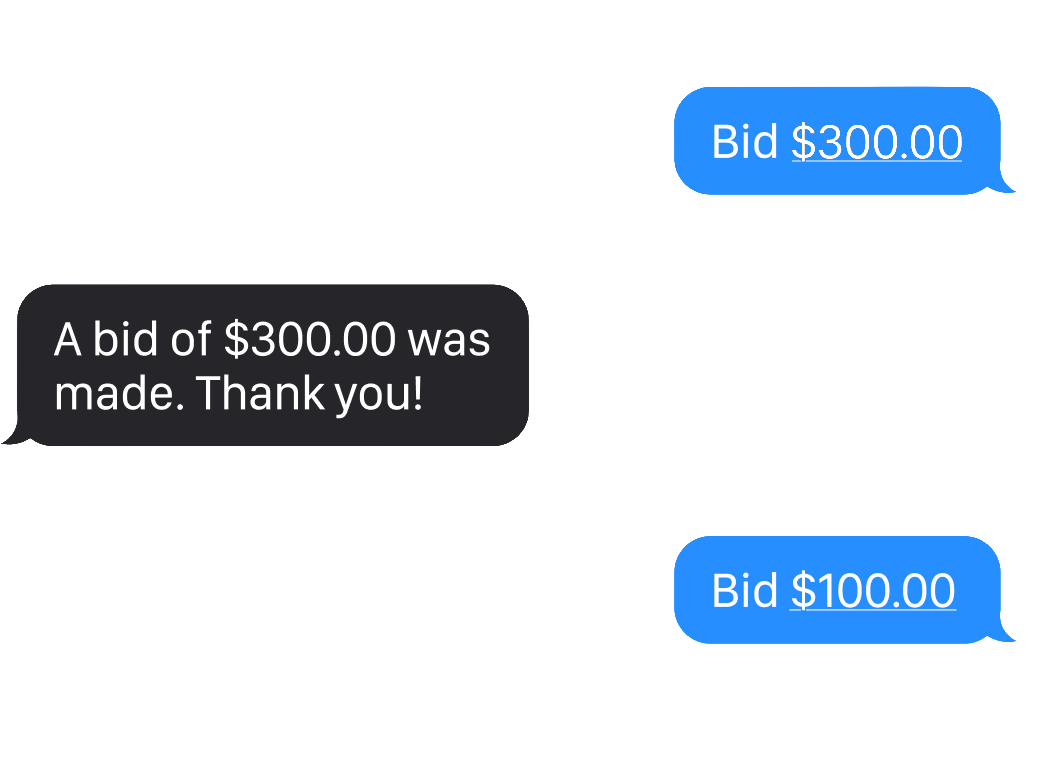
When mobile bidding first gained traction, it began with text-based bidding. With this technology, bidders can literally text in their bids using SMS. If their bid is high enough, the platform accepts it, and the bidder receives a text response acknowledging their bid and winning status. If their bid is not high enough, they receive a text prompting them to try again.
Typically, this technology also enables text-to-give, allowing guests to donate easily throughout the event, even when they’re not bidding on auction items.
Web-Based Mobile Bidding Tools
Today, mobile bidding software solutions are primarily web-based solutions. These tools allow guests to bid on their mobile devices from an auction website. This is more streamlined than text bidding, since participants can post bids directly to the auction server rather than relying on their mobile carrier. When guests are outbid, they typically receive a text notification.
Web-based auction technology is a great choice for some organizations. However, most web solutions on the market today come with the following challenges:
- Most mobile web interfaces are merely pared-down, less functional versions of larger websites. Not all websites are optimized for mobile, which can leave bidders frustrated as they try to navigate confusing layouts and too-small buttons.
- Mobile website solutions rely on SMS to communicate back to the user. Therefore, these solutions don’t work well (really, don’t work at all) in situations where the device has no cellular data connection but can still connect to Wifi.
Ultimately, these challenges make web-based bidding tools less engaging and more frustrating for your guests. Fortunately, there’s another option!
Native Mobile Bidding Apps
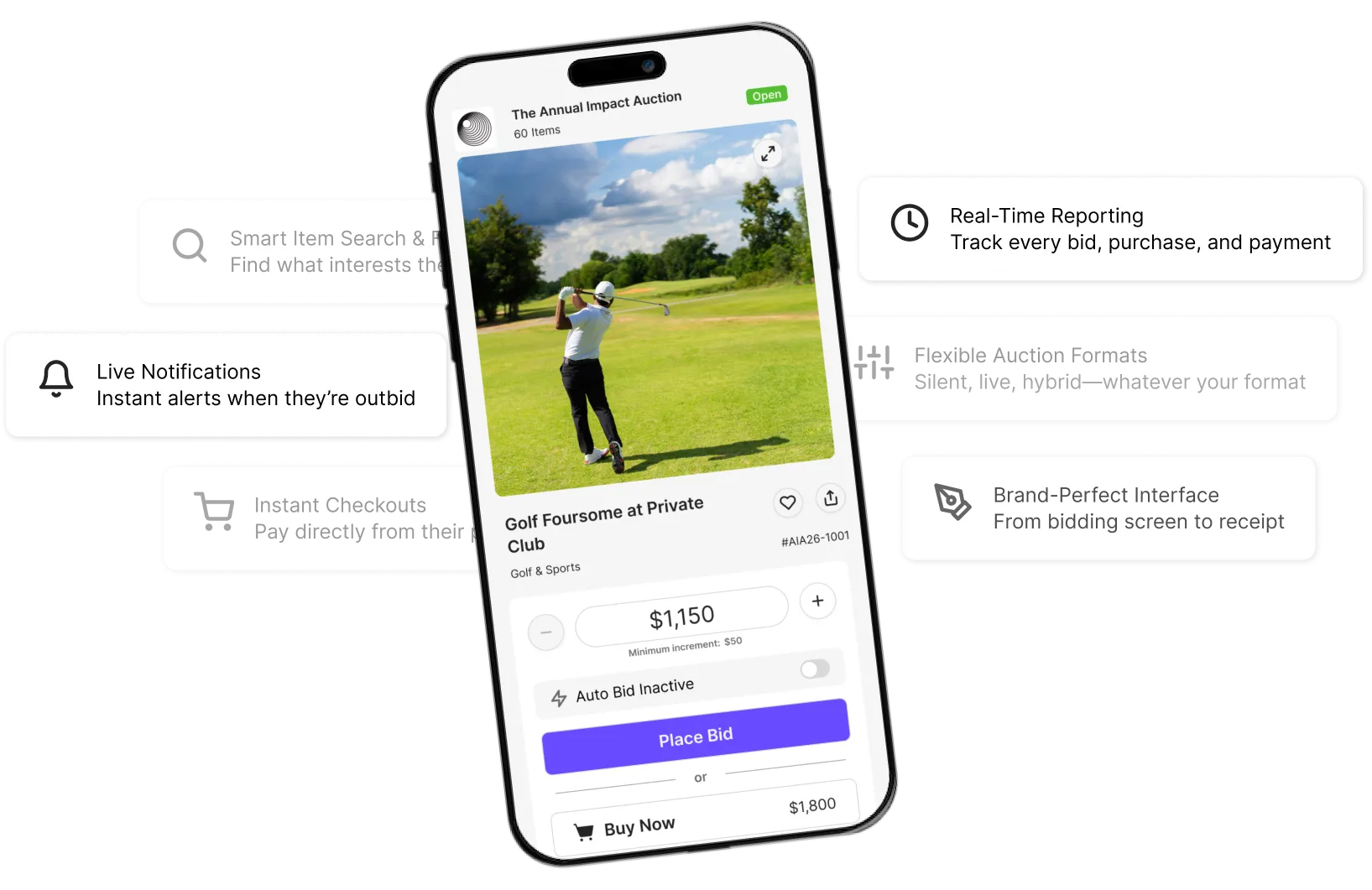
What’s better than bidding via a website on your phone’s web browser app? A native app created and designed just for mobile bidding.
Mobile apps are more responsive and interactive than standard web pages. Guests can download them from their phones’ app stores, run the app natively on their devices, and receive push notifications directly within the app. Native apps have a number of advantages over a web-based bidding system. In particular, native apps can:
- Create the most “real-time” bidding environment possible: Apps are often faster and more responsive than web pages. If you want to keep your bidders engaged, give them an engaging interface. For example, the Handbid app offers a streamlined, easy-to-use interface designed just for mobile devices, complete with built-in gamification and engagement features.
- Send push notifications directly to bidders’ phones: Every time someone gets outbid, they’ll receive an alert that takes them to your item catalog with just one tap, encouraging them to raise their bid. Organizers can even configure notifications to vibrate the phone and play sounds to make them stand out from other notifications.
- Streamline auction checkout: Users can easily keep their cards on file for multiple auctions and pay their invoices directly from the app. Or, guests can pay with integrated payment solutions like Apple Pay or Google Pay for added convenience. By allowing users to review and pay on their phones, you can eliminate checkout lines entirely.
- Give your organization a presence on the user’s device: Auction websites are forgotten once the event ends, but this isn’t true with a native app. The vast majority of users do not delete apps after they install them, allowing you to maintain a presence on the device and reconnect with users on an ongoing basis. Plan on running multiple auctions per year? Your native app lets you easily re-invite former bidders to your next auction!
Native apps keep your guests in one digital location, providing everything they need to engage with your event from a single, unified app. With Handbid, you can even customize your auction app to completely align it with your organization’s branding.

FAQs About Silent Auction Technology
Some nonprofits have concerns that native apps are too much of a hassle for your event. We regularly get a few common questions:
Will older guests know how to use silent auction technology like native apps?
It depends. While older generations may have more trouble than tech-savvy youth, consider these points:
- Apps are often easier for non-tech-savvy users to use than a web page that’s not optimized for mobile.
- Apps let you take advantage of the device's accessibility settings. For example, Handbid’s native app reads a user’s device settings and adjusts the font size, contrast, and button formats based on user preferences.
- Most guests who won’t use an app won’t want to use the web on their phone either. Those non-techy guests are best off bidding from a tablet with a volunteer’s help. Handbid has an app for iPad that serves this purpose well.
What if a guest can’t remember their password for auction technology?
We all forget passwords from time to time, but thank goodness they are easy to recover. But recovery methods aside, this issue is more of a fear than a reality.
Having helped thousands of bidders set up Handbid on their phones, we have seen this issue largely disappear. Years ago, it was the guest calling their son or daughter to get the iTunes password. Today? These guests are downloading apps using facial recognition in seconds.
What if my guests won’t download a silent auction bidding app?
In our experience, the answer is an overwhelming “yes, they will.” We’ve had thousands of conversations with thousands of bidders, and we know that most of the time, guests will follow whatever instructions you give them.
If a guest isn’t sure how to download your app, they can ask a volunteer for help or use a tablet during the event. Either way, the app will generate more engagement, more bids, and more revenue for your guests than web-based bidding tools. However, Handbid offers both a web and an app version of the software for those who want that choice.
Meeting All Your Silent Auction Technology Needs
If you’re in the market for new auction software, we hope this article has given you some insights into the types of solutions out there. Handbid supports all three of these functionalities in an integrated solution that lets you manage your auction from start to finish.
To learn more about how Handbid works, click the button below to request a personalized demo.