

University auctions are a powerful tool for fundraising, engaging alumni, and making the most of outdated resources. If you're a higher education professional, understanding the ins and outs of auctions is key to maximizing their success. For bidders, university auctions provide a unique opportunity to acquire valuable items, from historical memorabilia to specialized lab equipment, often for a fraction of their market value.
Whether you're a university staff member or someone looking to score deals, we’ve got answers to your questions. This guide breaks down the basics of university auctions and how to engage with them.

What Are University Auctions?
University auctions are organized events where universities auction off various items, typically for fundraising or surplus purposes. They can take many forms, ranging from in-person events to hybrid or fully online auctions, depending on the university’s needs and goals.
University auctions offer a platform for people to bid on a wide array of items, including rare and one-of-a-kind items, like archival materials and signed university memorabilia.
Fundraising vs. Surplus Auctions
University auctions typically fall into two main categories: fundraising and surplus auctions. Here’s a quick breakdown of the differences:
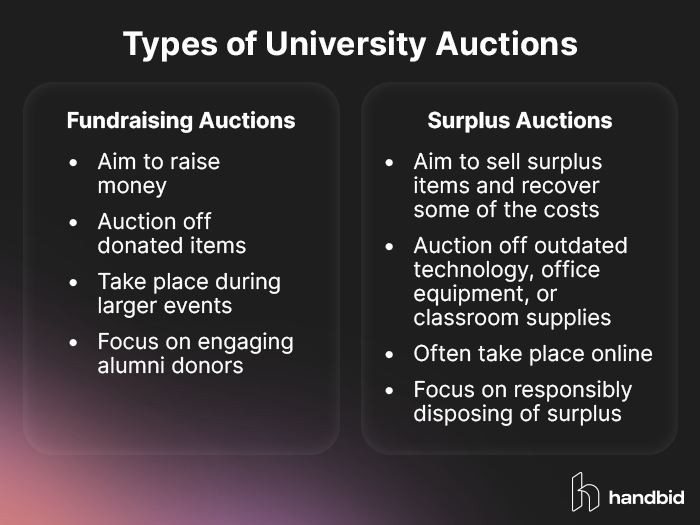
- Fundraising auctions aim to raise money for specific university initiatives. These events often:
- Auction off items donated by alumni, faculty, or community partners.
- Take place during larger events like galas, alumni gatherings, or special university events.
- Focus on engaging alumni donors and raising money for scholarships, research projects, or capital improvements.
- Surplus auctions sell university surplus items to free up space or recover some of the cost of those items. These events typically:
- Auction off items like outdated technology, office equipment, or classroom supplies that the university no longer needs.
- Take place online over a longer period of time than fundraising auctions.
- Focus on responsibly disposing of surplus, providing an extra source of revenue, and balancing out university finances.
To be clear, both types of auctions will help your university raise funds for specific departments or programs. The key difference lies in the purpose of the auction.
Surplus auctions do raise funds, but their main purpose is to responsibly clear out surplus items. Fundraising auctions, on the other hand, aim to boost both short-term and long-term fundraising results by engaging donors with a fun activity. Universities might host both types of auctions at the same time, but they’ll likely take different shapes.
Why Do Universities Host Surplus Auctions?
Surplus auctions are an essential part of university operations. Not only can these auctions generate additional revenue for schools, but they also help universities comply with state laws that mandate the disposal of surplus property. Additionally, surplus auctions allow universities to free up space and ensure unused or outdated equipment is appropriately managed.
Universities might host surplus auctions for several reasons, including:
- Legal requirements: Many states require public institutions to auction off surplus items to ensure transparency and fairness.
- Revenue generation: Surplus auctions provide an easy, ongoing source of revenue that can supplement the university’s budget.
- Clearing out unused items: Universities often accumulate equipment, supplies, and materials that are no longer in use, and surplus auctions provide a way to dispose of these items while recovering some of their value.
- Following GAAP: Generally Accepted Accounting Principles (GAAP), as well as IRS rules, require entities like schools and publicly-funded universities to spread the cost of large purchases (like technology) over several years, then auction them off.
Because of the benefits to universities, many higher ed institutions host surplus auctions year-round. Most live on the university’s website and get updated throughout the year as new surplus items become available.
What Items Are Sold at University Auctions?
The items sold at university auctions can vary widely based on the university’s departments and needs. Common items sold in surplus auctions include:
- Outdated technology (computers, printers, etc.)
- Office supplies (desks, chairs, filing cabinets)
- Classroom supplies (chalkboards, projectors)
- Archival materials (documents, books)
- Commercial cleaning equipment (floor buffers, vacuums, mops)
- Lab equipment (centrifuges, microscopes, freezers)
- Furniture (couches, desks)
- Vehicles (trucks, vans)
At fundraising auctions, the options are essentially limitless. Common items sold in fundraising auctions include:
- Sports memorabilia (signed jerseys, photos, autographs)
- Artwork (paintings, sculpture, drawings)
- Experiences (VIP sports game seats, lessons with faculty)
- Historical school memorabilia (old yearbooks, vintage apparel)
- Gift baskets
- Items from local businesses
Do Schools Auction Off Old Lab Equipment?
Yes, many universities auction off old lab equipment. Science departments frequently upgrade their equipment, and older instruments may be in good condition but no longer meet current needs and standards. Lab equipment like microscopes, spectrometers, and test tubes may be sold to smaller institutions, research organizations, or even other universities in need of affordable tools.
How Do You Host University Auctions?
If you're a higher education professional considering hosting a university auction, the process can be confusing. But with the right tools and plans, you can host a successful auction that meets your department’s needs and sets your university up to raise more funds in the future.
The process will vary depending on your auction’s format and goals, but here’s a list of the basic steps you should take:

- Source auction items: Gather surplus or donated items from various university departments and donors (such as technology, office supplies, lab equipment, and memorabilia).
- Choose your auction platform: Selecting auction software, like Handbid, will help you ensure your auction runs smoothly and make it more engaging for bidders.
- Set up your auction: Set up your auction online or in person. For online auctions, you’ll need to upload images, add item descriptions, and set bidding rules in your auction platform. For in-person events, set up physical item displays, check-in stations, and seating areas for guests.
- Market the auction: Promote the event via email, social media, and other university channels to encourage participation. Make sure to include the auction’s timeline and links or QR codes guests can use to register quickly.
- Engage bidders: Once your auction begins, encourage competitive bidding by highlighting desirable items and sending personalized notifications that alert bidders when they win or get outbid.
- Manage the event: Monitor bidding activity, manage payment collection, and coordinate the fulfillment of auction items after the event.
Whether you’re hosting your auctions online or in person, you can simplify many of these steps by using an intuitive, accessible platform like Handbid. Our university auction software streamlines auction setup, promotion, and management to help you sell more items and increase revenue. Plus, our online auctions are highly accessible and fully customizable to align with your branding.
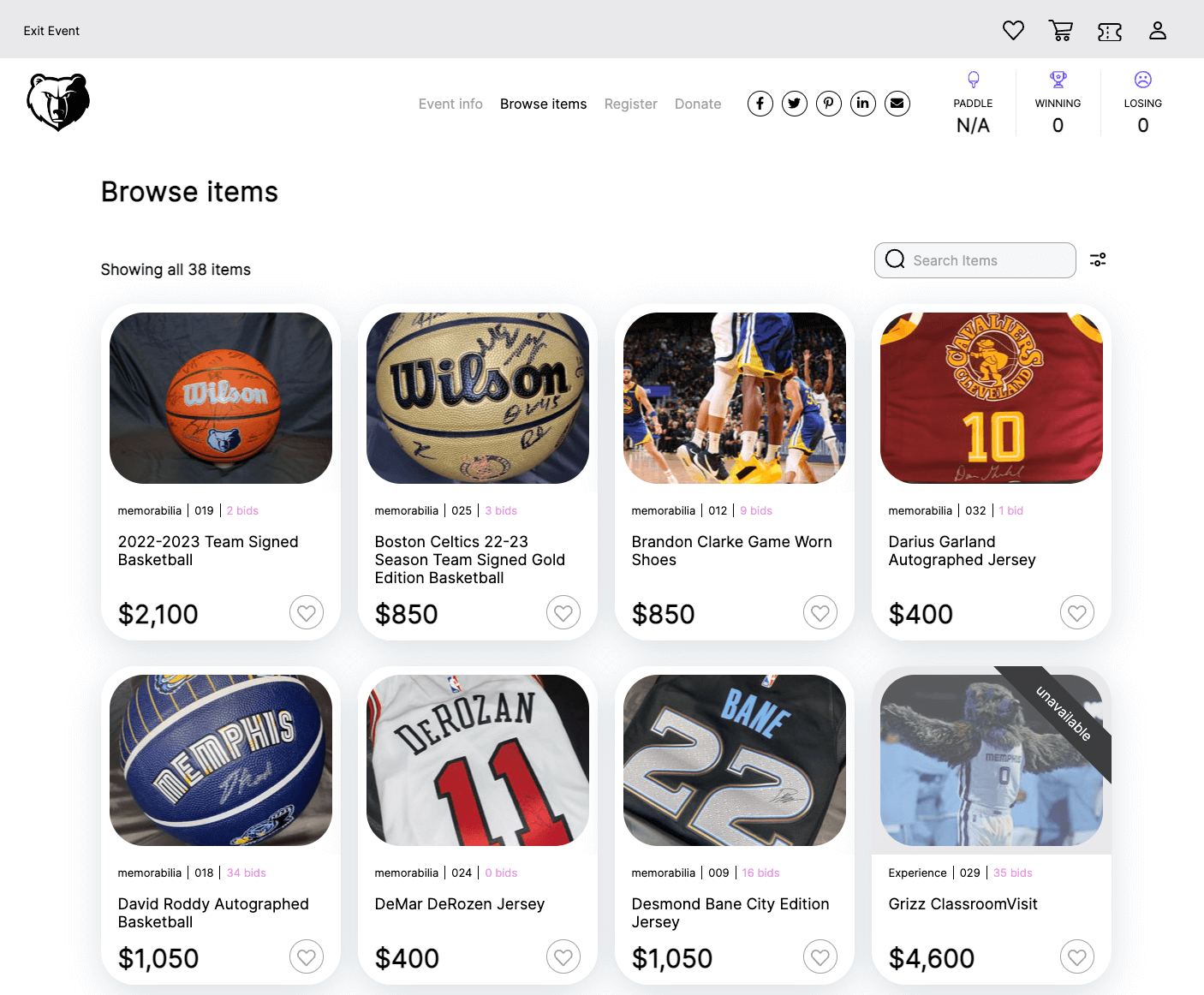
Leverage our mobile bidding software designed by and for fundraisers, or explore Handbid+ if you want a fully white-labeled auction site.

Do You Need Software for University Auctions?
While it’s possible to run university auctions manually, using auction software like Handbid offers several advantages. With the right software, your team can:
- Streamline online auction creation: Easily set up and organize your online auctions with a user-friendly interface.
- Increase accessibility: Online auctions allow more people to participate, increasing engagement and potential revenue.
- Make bidding easier: Bidders can place bids anytime, anywhere via their phones or computers.
- Manage everything in one place: Track bids, payments, and item distribution all within one solution.
You can also easily pull reports and see your auctions’ fundraising results to gauge their success. Once you’ve used auction software for one event, it’ll be even easier to run engaging, profitable auctions for your university in the future.
Wrapping Up
Hosting a university auction can be a rewarding experience, whether you're raising funds for scholarships or clearing out surplus items. By understanding the different types of auctions and using the right tools, you can ensure a smooth, successful auction experience.
For additional resources, check out these helpful links:
- How to Plan a Standout School Auction + 6 Fun Item Ideas: Running a school auction? This guide explains how to organize a successful school fundraising auction with best practices, item suggestions, and other helpful tips.
- Handbid’s University Auction Software: Discover how Handbid's auction software can streamline your university's fundraising and surplus events while increasing engagement and maximizing donations.
- How to Set Up an Online Auction & Boost Bidding Revenue: Learn how to set up a successful online auction with the right tools, strategies, and marketing plans to boost engagement and revenue.